


I'd love to hear from you
Whether you have a project in mind, or just want to say hi.
Whether you have a project in mind, or just want to say hi.
Shoot me an email

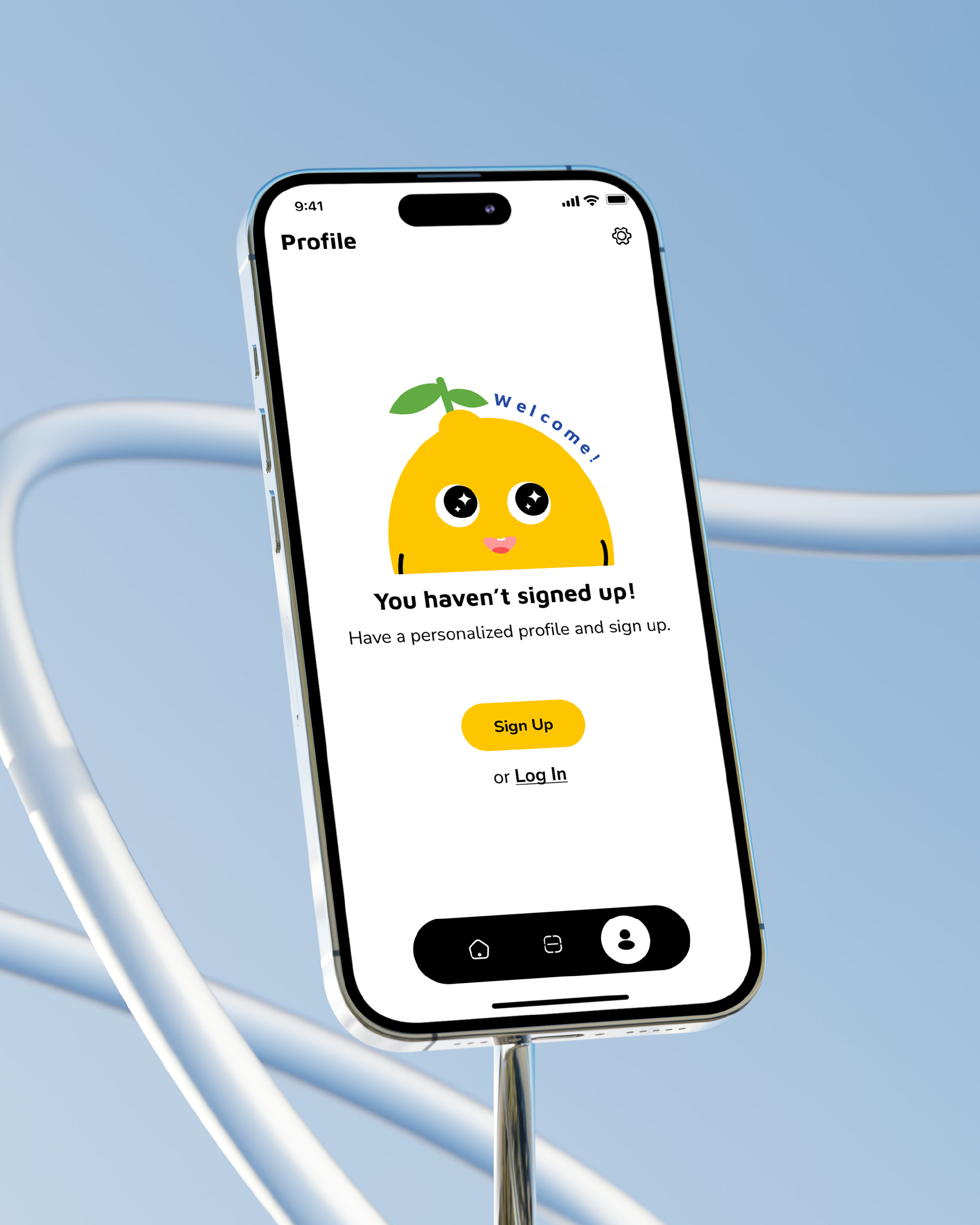
Peekabite was built for that moment. It's an AI-powered mobile app that lets users scan packaged food products and instantly receive a clear breakdown of what's inside nutritional facts, ingredient flags, health scores, and smarter alternatives. Over a 13-week capstone at Langara College, a team of four designers and four developers came together to bring this idea to life.

Context
Canada has a growing problem with ultra-processed foods. Over 50% of the average Canadian's daily caloric intake comes from them. Yet 70% of consumers struggle to interpret food labels, and brands frequently use vague or inconsistent language on their packaging. The result is a system where people are technically given information, but practically left in the dark.
The cosmetics industry had already started solving a similar problem. Apps like Yuka and INCI Beauty let users scan beauty products to check for harmful ingredients. The food industry had nothing comparable at the same level of clarity and accessibility. That gap became our starting point.
Insight
Through user interviews and health research, three consistent themes surfaced:
Users wanted to see past the branding.
These insights shaped every design decision that followed.
Problem
Standing in a grocery aisle, a user has maybe 30 seconds to decide on a product. The label is dense. The serving sizes are misleading. The ingredients list reads like a chemistry exam. And there's no easy way to compare one product to another without doing mental gymnastics.
The core problem wasn't a lack of information. It was a lack of clarity. Users couldn't act on what they couldn't understand, and the tools available to help were either too complex, too niche, or simply nonexistent for food.
Solution
Peekabite is built around three core features, each designed to meet users exactly where they are.
Design Intent
We introduced Peeka, a friendly mascot character, to give the app warmth and approachability. Nutrition can feel clinical and intimidating Peeka was our way of making the experience feel more like a knowledgeable friend than a medical report. We also made simplicity a design principle, not just a preference. Every screen was built to be usable mid-aisle, in seconds, without a learning curve.
One challenge we ran into during usability testing: when a scanned product wasn't in our database (sourced from OpenFoodFacts), users had to manually enter the product details, which created inconsistencies. We solved this by adding a community-powered Report Feature, letting users flag incorrect data. It kept the database accurate while giving users a sense of ownership over the platform.
Outcome
Peekabite launched as a fully functional mobile app, bringing together camera-based interactions, AI-generated insights, motion design, and character-driven UX in a single cohesive product. It was a meaningful exploration of what it looks like when design serves both clarity and personality and proof that health technology doesn't have to feel cold to be credible.
